Dragon Ball Z: The Legacy of Goku II (2003)
You aren’t dealing with the average Saiyan game anymore.
Gamers are a cynical, unforgiving bunch. It’s not always our fault. One could argue it’s never our fault. We have endured much hardship after investing our better years into these life-fulfilling products, so much that we are used to disappointment. We have seen cheap flops and big budget disasters. We have watched once beloved companies crumble beneath the weight of stockholder demands.
We also tend to dump our cynicism, vitriol, and general disdain on licensed games. Take the Dragon Ball series, for instance. As of this writing, there are thirty-seven-hundred DB games in existence; among them, maybe seven are good.
Dragon Ball Z: The Legacy of Goku was not among those seven. While it wasn’t the worst game I ever played, it may have been the most mediocre. It made no effort to retell the story it adapted, moving Goku from setting to setting at the same rate he abuses Teleportation.
But that was far from its worst problem. The game suffered from terrible balancing issues and awful hit detection. Like, hey, remember episode two of Dragon Ball, when a 12-year-old Goku deflected a pack of wolves like they weighed nothing? In Legacy of Goku, one wolf killed an older, far more powerful Goku in a single strike, after the game failed to register his punch.
We’re a cynical, unforgiving bunch. Yes, and our memes and our YouTube videos rain pure destruction upon failure. In the irradiated aftermath, second chances are rare. But Dragon Ball Z: The Legacy of Goku II is a staggering example of a development team not only getting that second chance, but proving themselves with a positive turnaround. The legends are indeed true. I don't know what kind of Dramamine Webfoot drank while programming the first game, but they worked out their issues in Game Rehab. Small grievances aside, Legacy II improves upon almost everything its predecessor did wrong.
The game picks up where Legacy of Goku did its poor job of leaving off. After everyone went to Namek to resurrect their friends with the Namekian Dragon Balls, Goku became a Super Saiyan and defeated the tyrannical Freeza. That sentence told you more about what happened in LoG than the actual game did. But I digress. Goku has been missing for a year since all that went down, with everyone on Earth wondering when he will return. This becomes a problem when Freeza survives the battle and shows up to commit good ol’ fashioned revenge genocide.
Before Goku can intervene, Freeza’s mass murder plot is cut short in the form of a time traveling teenager named Trunks, who shows he can go Super Saiyan, too. By the way, I just impersonated the old dub narrator.
Goku lands on Earth after that. Trunks confesses he’s a time traveler from the future, and in the future, all is devastation. Two Android antagonists have reduced humanity to almost nothing, the Z-warriors are too dead to fight back, and Goku himself has perished from a heart virus.
With this knowledge in mind, everybody trains for three years to face the coming threat. After the robots do show up, whatever damage they output pales in comparison to a bug monster named Cell. His goal is to absorb the two Androids into his being, which will allow him to achieve his ultimate form.
Now, the Android and Cell sagas are where DBZ starts losing me as far as logic’s involved. Not that Dragon Ball was ever that logical to begin with. As far back as the first tournament arc, we were told a few months of training could have characters leaping fifty feet in the air and throwing opponents out of the ring. We’ve never operated on a wavelength of reality here.
These sagas make the extra misstep of telling us threats homegrown on Earth outclassed the universe’s most powerful villain. These Androids can also beat up Super Saiyans, after a multitude of source material established that Super Saiyans were legendary superwarriors.
It’s kind of dumb. But I don’t hate it or even dislike it. In fact, a recent chapter-by-chapter manga reading made me realize there’s a lot to admire about these sagas. There are character arcs, allusions, and story themes alike that stand out.
As I replayed Legacy of Goku II, the big question on my mind was how well the game retells these story elements. It has a lot to prove since the last big fumble, and I’m anal about this anytime I play a Dragon Ball game. I always wanted one where the player understands everything without needing the manga or anime for context. In other words, the game should stand on its own.
Legacy of Goku II should’ve had Legacy of Goku do its share of exposition. But we don’t live in that timeline, so a video game set in the middle of an ongoing story can only do so much. Which is to say, Legacy of Goku II does a much better job with context than its predecessor did. However, it still needs some knowledge for full comprehension. Any Dragon Ball illiterate coming into this with Legacy of Goku as their primer sure won’t know who Dende is.
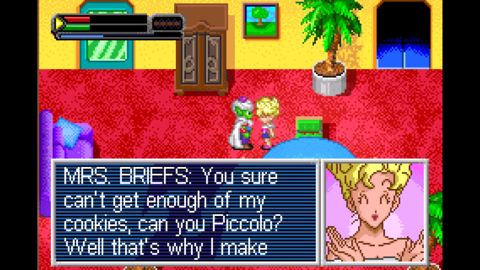
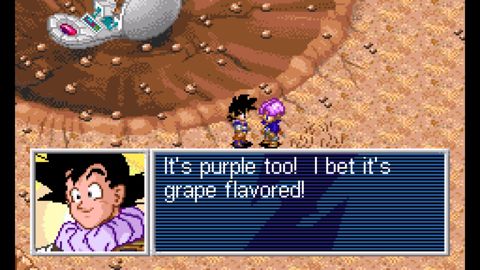
Some parts of the story are glossed over; others are outright skipped. Regardless, the game condenses and retells almost 80 anime episodes in a way newcomers can (almost) follow. The writers derive the dialogue from the 2000 FUNimation Toonami dub, which means the dialogue sucks sometimes. On the other hand, it’s expected since an American company developed the game.
Before the plot's presentation gets a chance to shine, however, the first thing that stands out is how much better this game plays than the first one. The difference is night and day, like the sky darkening when the dragon is summoned.
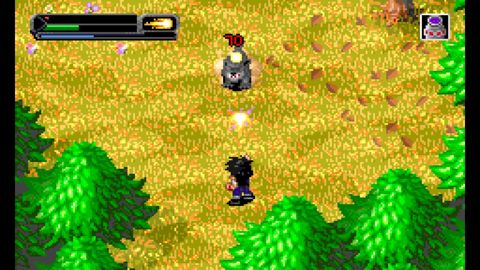
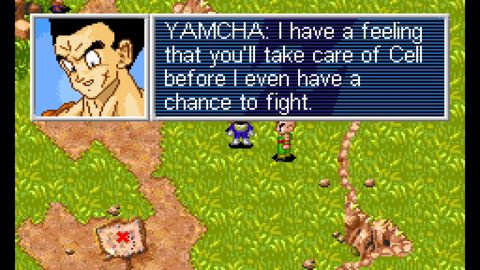
Dragon Ball Z: Legacy of Goku II is an action RPG, meaning its combat is real-time instead of turn-based. And the first huge improvement is actual, smooth, tolerable hit detection. Hits connect when they are supposed to. Characters can lock enemies into combos, smacking them across the playing field in addictive gameplay loops. But those same enemies can also dish out pain, breaking free of the assaults and turning them around. One-on-one fights, therefore, aren't just Win Button spamming.
Balance is another huge improvement. Granted, II still requires leveling up to ensure success. Walking into a boss fight without grinding always results in a one-sided affair. The difference isis Gohan can venture into the woods at level 2 without a wolf one-hitting him. Dicey situations can still happen, but now they won’t guarantee failure.
There are five characters to pick from this time: Gohan, Trunks, Vegeta, Piccolo, and of course, Goku. Characters unlock as the story progresses, and sometimes the game locks the player into a preselected hero.
As the story goes on, new areas in what becomes an open Dragon World map unlock. The player has the option to rush from one end of the story to the other, barring all the aforementioned, necessary grinding. Far from being a linear connect-the-dots from Plot Point A to Point B, however, there are plenty of side tasks. Stranded Namekians need finding, Cooler destroying, and Golden Capsules collecting. The ultimate optional goal is unlocking Mr. Satan…or Hercule, to us puritanical Americans…at the end of the game. And yes, I once spent an astronomical amount of time accomplishing that very task. Yes, it was worth it.
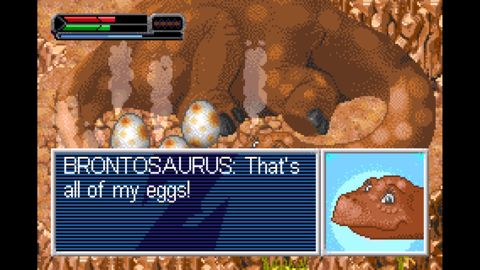
Aside from one infamously frustrating, mandatory task involving dinosaur eggs, Dragon Ball Z: The Legacy of Goku II is a game full of addictive, mindless fun. This is proof that a team can redeem itself after a blunder. It’s also the only Dragon Ball game I’ve played through more than twice.
At the same time, I can't help but feel sad. This is the game Legacy of Goku should have been. A shame, really; I would have loved to play through Tree of Might while searching for Dragon Balls.
Final Rating: *** ½